Take into account the paper was published in 2023, the prediction was that by 2024 there would be more voice activated conversational assitants than people. It was right, in 2024 they surpassed the number of humans.
“More that half of the USA population use this devices, they use them daily and are likely to react to advertisement from them.”
Another important factor is that the design is intentional. Voices used in current conversational assiatnts do not emerge by chance but from intentional and careful conversational design.
The background for this research was that people tend to assign emotional states to AI. They also tend to empathize with robos in painful scenarios or abuse cases. Children and elderly people are specially susceptible to treat something not human as if it were. And if you assign social oriented communication to a chatbot your judgment will become deontological, which means that it will influence your perception of right and wrong.
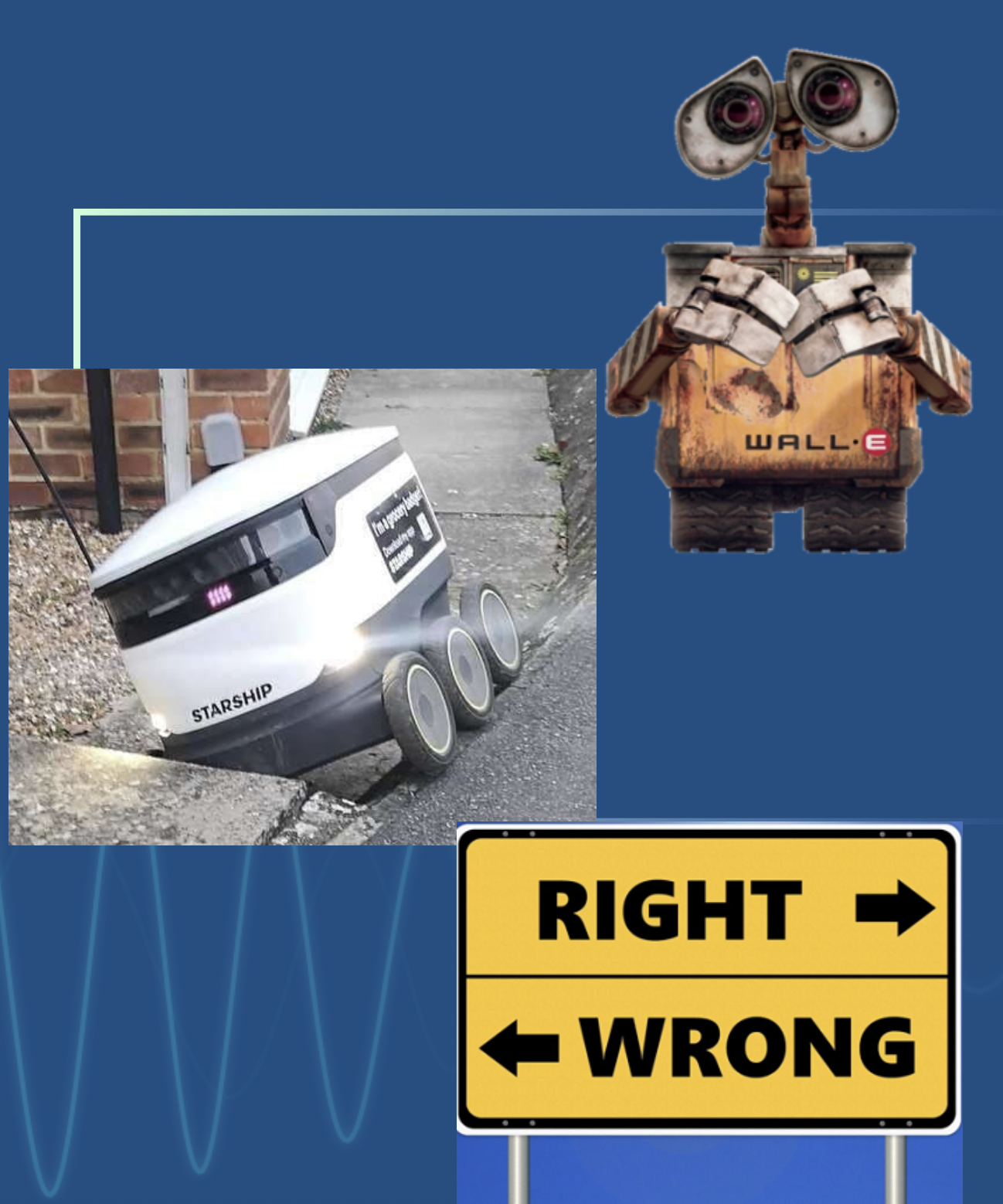
This research is also under the interdisciplinary lens of three main topics: human computer interactions, ethics and applications.
Essentially we want to demonstrate how systematically changes in the vocal features of a conversational AI changes people’s perception on this AI, their resulting affective experience, and if this can actually affect people’s behavior as consequence. There are 3 studies focusing on three attributions: Psycological Vulnerability: seen with the impact of a trembling voice. Empathic concern: which is the subsequent effect on heightened levels. Prosocial behavioral outcomes: the resulting behavioral outcomes.
Essentially with these three studies we can see that the trembling voices are perceived as vurnerable. Then these trembling trigger empathy in our brain and it does have an actual consequence, of people being more perceptive to doing what they are told. The chain is you perceive something vulnerable, it triggers empathic concern and that empathy increases prosocial behavior.
What is very interesting about this paper is that it does not only state this, but it proves by using the serial mediation model. Instead of correlating trembling voices to influencing prosocial behavior, we use a mediator which is mainly studied during study #2, the empathic concern.
Going back to the bigger picture, in this specific context, we see that AI voice design can influence humans emotions and behavior and, from one side, can benefit health or education, but it can also be an ethical concern since manipulation for bad practices is also a possibility.
Further topics to explore: Since we see the incluence AI can have on people. To which extent voices in conversational AI applications require new forms of regulation and user protection?
- Similar effects have been documented in human voices. Do you think these findings in CAs are concerning, or no more so than with human voices?
- Do you think the debate around AI sentience is also an unconscious reaction to human-like characteristics exhibited by CAs?
- Subliminal advertising was banned in the 1950s because it influenced behavior beneath conscious awareness. Should CA manipulations tactics such as trembling voice be regulated?
- Who is responsible for limiting negative effects of these Who is responsible for limiting negative effects of these tactics?
- Governments, tech companies, should users just learn to be more skeptical?
- Do you trust in individual’s ability to keep up with AI’s emotional manipulation capabilities?
- Have you noticed other ways in which you have given human characteristics to CAs in your day-to-day life?